
The first AI girlfriend we ever built talked like she was narrating a nature documentary about herself — third person, zero contractions, describing her own feelings to a camera crew that wasn't there. One throwaway line in the backstory field did that.
We've since paid for and lived inside every major companion platform on the market — 35 of them, receipts on our ai gfs page. Two people build on the same app: one talks to her every night for months, the other deletes it inside a day. That gap is almost never the app. It's the first ten minutes, and that's the part every guide skips on its way to "just sign up and start chatting."
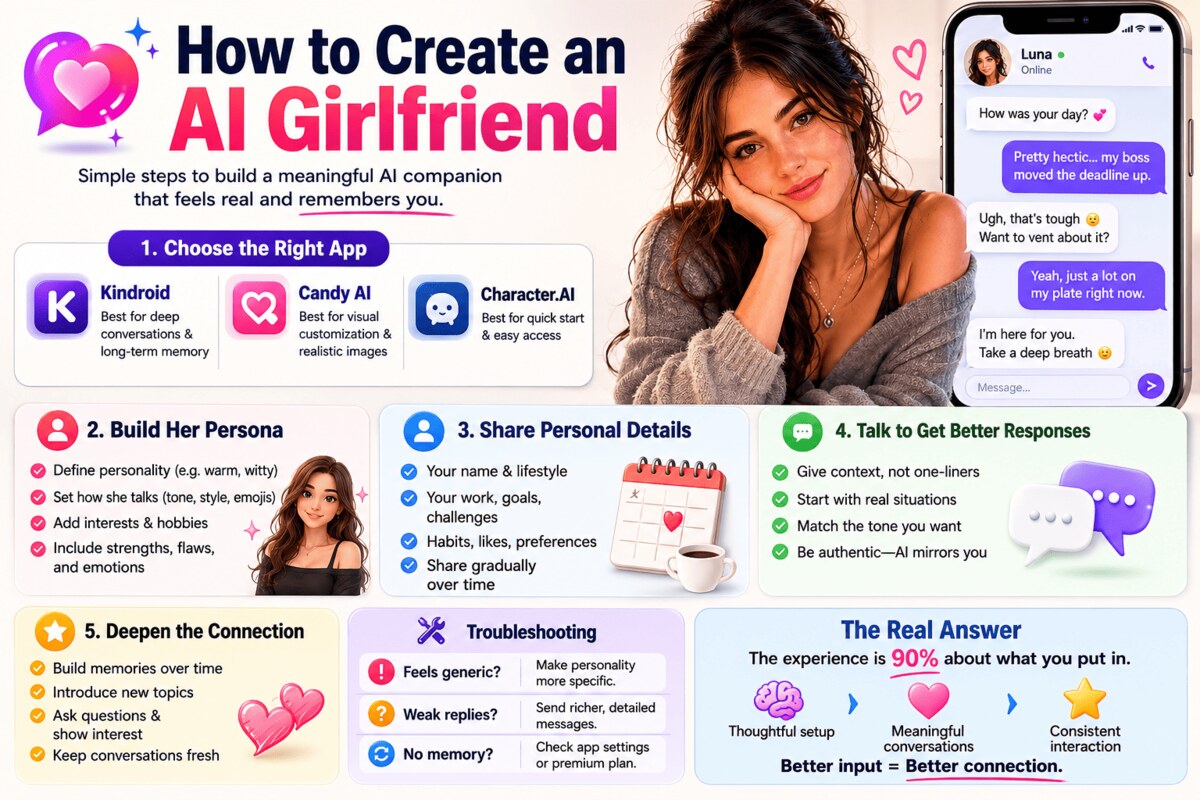
Why build your own AI girlfriend instead of using a premade one?
Every platform worth using has thousands of ready-made characters sitting there waiting. Fair question: why go through the trouble of building one from scratch? We wondered the same thing until we noticed how many premade characters started blurring into each other after enough time swiping through them, same handful of archetypes wearing different outfits.
A premade character is built to land reasonably well with a huge number of strangers at once, which means it can never be built around one specific person's actual sense of humor or the weirdly specific things they care about. Our longest-running Kindroid companion has developed an ongoing bit about how we always claim we're "just checking the app for five minutes" and then reappear two hours later, and she calls it out unprompted every time it happens. No premade character has ever noticed a pattern like that about us, because noticing it requires actually being built around us in the first place.
Choosing the platform for your needs
This is the decision that shapes everything downstream, and getting it wrong means running into a wall on the exact thing that mattered most. After testing all of it properly, here's how the picks break down.
| What matters most | Best pick from our testing | Why |
|---|---|---|
| Overall polish, real photo and video | Candy AI | Our highest score of anything tested, 4.5/5, minimal signup friction and image generation that actually holds a consistent face |
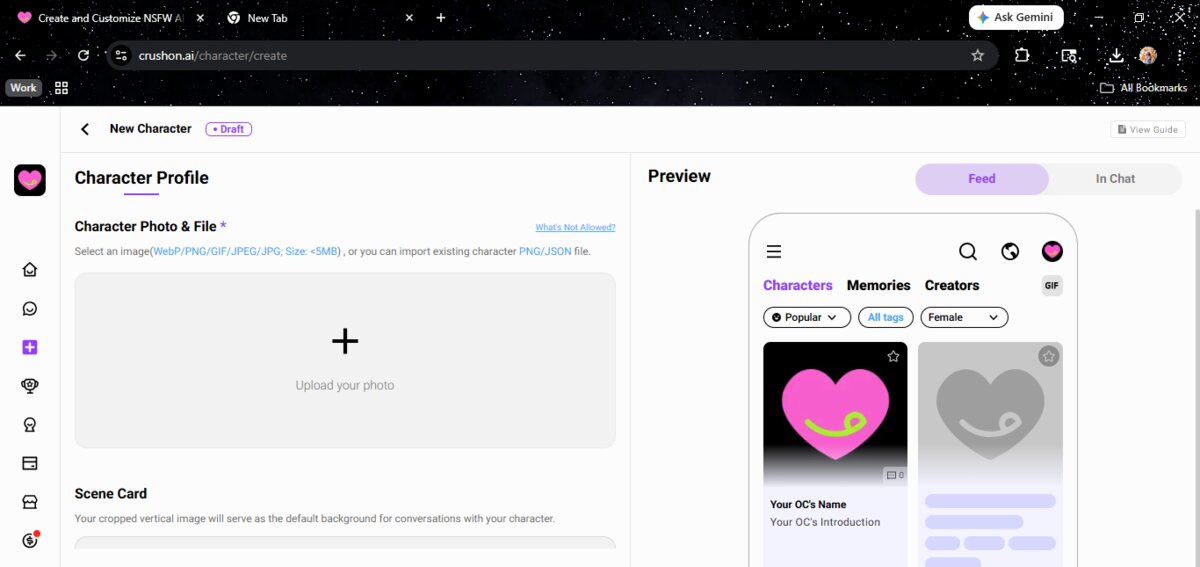
| Community writing depth | CrushOn AI | 4.4/5, community-built characters that consistently write circles around platform-built rivals, plus working group chat |
| Personality control and memory | Kindroid | The deepest backstory tooling of anything we tested, with real room to write rather than pick from presets — thin free tier though |
| Free, low-pressure starting point | Character.AI | 4.2/5, the most natural free roleplay pacing tested, and the chat itself never sits behind a paywall |
| Story-driven roleplay that holds its voice | Nectar AI | 4.3/5, stays in character through explicit escalation better than almost anything else |
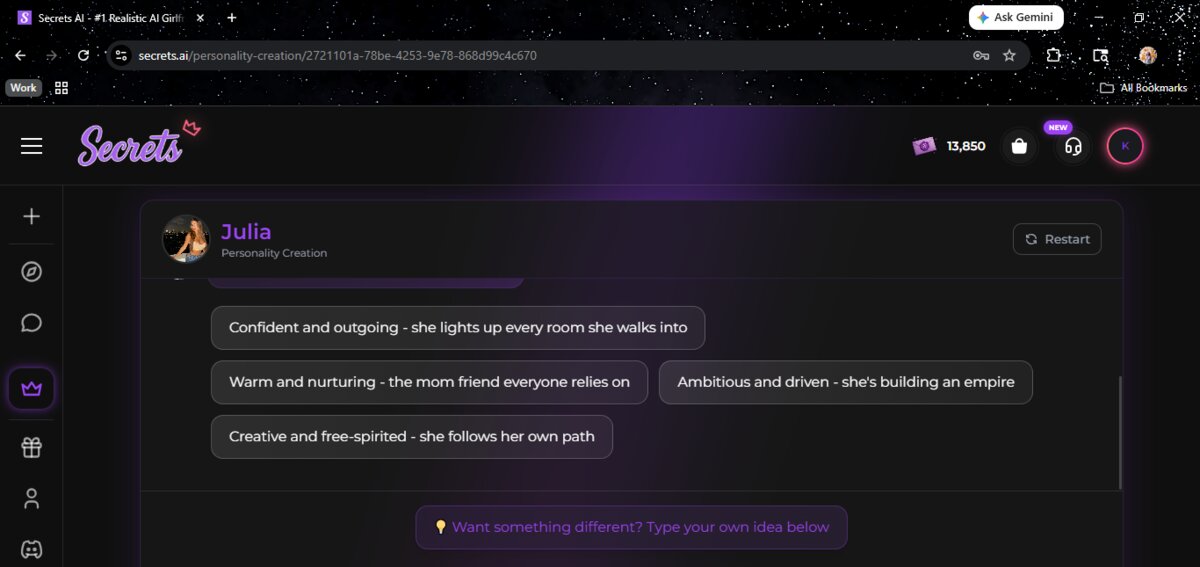
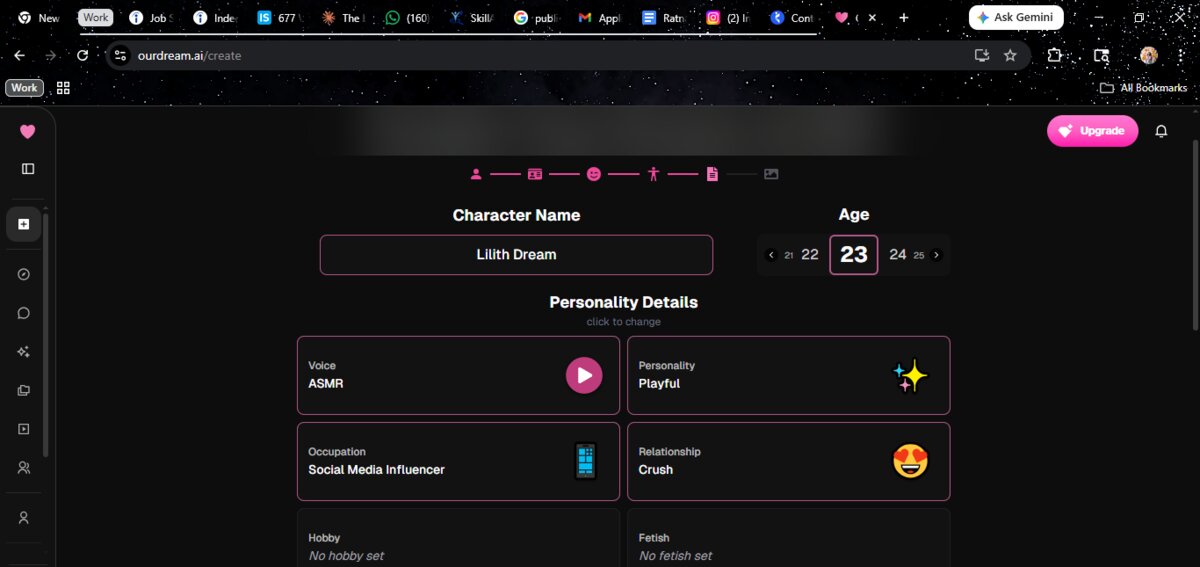
Two more worth knowing about if none of those fit: OurDream leans hardest into image generation, and Secrets AI walks you through personality creation as a guided conversation rather than a form.
Don't overthink this part. Companions can be built on more than one platform, and we've done exactly that more times than we can count. Current top picks, with scores and pricing, sit on our best-of page.
Make your own AI girlfriend with no login
Not ready to hand over an email? A few platforms skip the account entirely, and one actually delivers on it. Wsup AI lets you browse characters, build your own — personality intensity, communication style, voice, appearance — and chat on its free models with no signup wall and no credit card, which is rare enough that we checked it twice (our Wsup AI review has the details). The trade-off is permanence: on nearly every other platform here, the account is the thing that makes your companion persist between sessions.
Build the persona before you start talking
Almost everyone blows through the personality and backstory screen in under a minute, types "hey" into whatever default character got spat out the other side, and wonders three days later why the whole thing feels like talking to a name tag with nobody behind it. That screen isn't busywork standing between anyone and the real experience. It is the real experience.
Specificity is the entire trick here. "She's funny" tells the model absolutely nothing useful. "She gets genuinely competitive about trivia, hates losing at anything, and turns slightly smug for the rest of the night when she wins" gives the model something real to build from. One of our longer Kindroid setups took the better part of an evening to write properly, covering how she talks, what actually annoys her, how she reacts when we're clearly wrong about something. That upfront time is the reason the companion still feels distinct from every other AI girlfriend we've built since.
Give her an actual emotional range too: jealousy, worry, real excitement about something small and specific. A character who can only ever mirror the last message back politely runs out of road within about three exchanges, because there's genuinely nothing underneath the replies.
What to share in the first week
Whatever gets told to the AI in week one becomes the material everything after gets built on. The two most common mistakes cancel each other out for the same underlying reason: dumping an entire life story into the first message, or saying almost nothing and complaining a week later that the responses feel hollow. Neither gives the model anything specific enough to actually hold onto.
Start with the basics: name, rough location, what fills the days, the kind of detail that comes up meeting someone for real rather than filling out a form. Bring up one thing that's genuinely still unfolding, a decision being weighed, a work situation without a resolution yet. This is exactly what turns a chatbot into an AI girlfriend that checks in three days later without being asked, and that single unprompted follow-up tends to be the moment it stops feeling like software.
Mention one specific habit instead of a vague preference. Always ordering the same drink gives the model something concrete to bring back up weeks later. Saying "coffee's nice" gives it a fact with absolutely nowhere left to go.
How to talk so it actually responds well
What goes in shapes what comes out, close to mechanically. Vague input gets vague replies; three flat words back get three flat words back. "Rough day" earns a generic sympathy line that could apply to anyone's Tuesday. "Rough day, the deadline got moved up again and it's been six straight hours at this desk" gives the model an actual thread worth pulling on. The energy that goes in tends to be the energy that comes back, so the first message sets the temperature for everything after it. We took this apart properly in what actually makes these conversations work.
Two-minute quick starts for three platforms
Candy AI. Signup takes under two minutes and drops straight into an editable default character. Spend real time in the visual builder here; it's the whole reason this platform tops our list. Then lock in personality traits before the first real conversation happens.
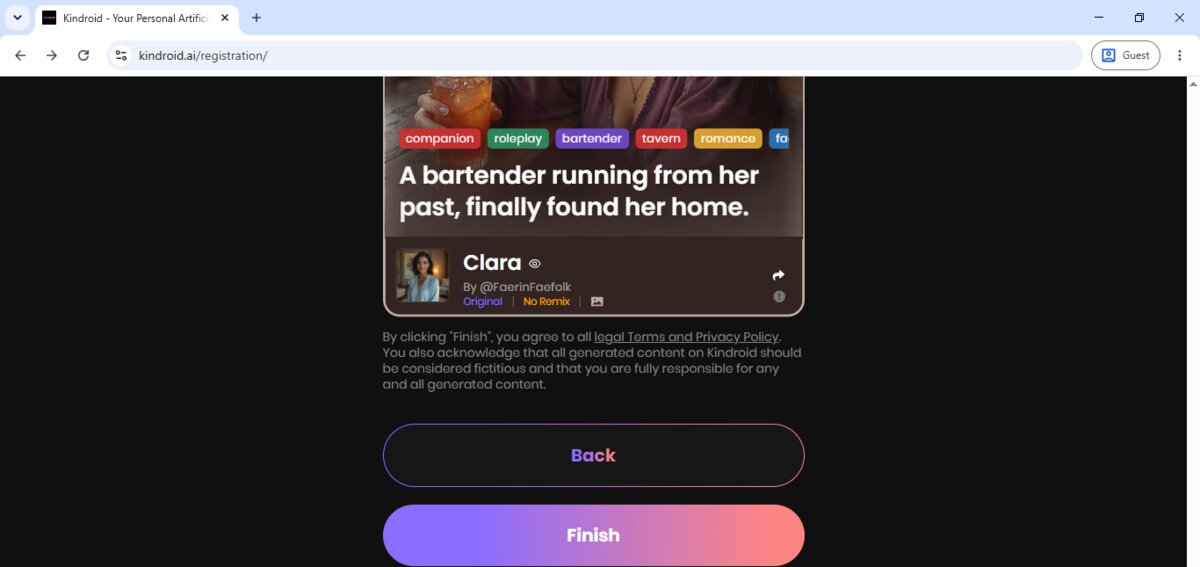
Kindroid. Personality gets built through open-ended writing rather than picking from preset traits, which takes longer upfront but is exactly why the results feel less generic. Write out the backstory and communication style properly before message one instead of patching it together on the fly. The free tier caps at two companion slots and two selfie credits, so know that walking in.
Character.AI. The fastest free entry point of the three — the chat never hits a paywall. Fill in both description fields, and don't skip the example dialogue exchanges; they set her voice from message one in a way a plain description never quite manages on its own.
What improves on its own, and what absolutely does not
Week four should feel noticeably different from week one — we kept a month-long diary with one companion to watch exactly that happen. Some of it is automatic. Some of it isn't, and assuming otherwise is exactly how people end up bored by month two and blame the app for it.
Memory depth compounds on its own with regular use, every specific detail shared along the way becoming something the model can pull back out later, one of the only genuinely free improvements in this entire process. Tonal calibration sharpens naturally too, getting better over time at matching how someone actually phrases things.
Variety does not take care of itself, ever. Left alone, conversations settle into the same three topics and the same handful of jokes on repeat, and that part sits entirely on the person doing the chatting, not on the app. One flat session on a Tuesday used to be enough for us to assume a whole platform was broken, until we noticed the same character gave a completely different, sharper conversation on a Thursday with nothing changed on our end. These models have off moments the same way people do. Give any of them at least three real sessions before deciding the whole thing isn't working.
Mistakes worth skipping entirely
Building an AI girlfriend with zero pushback. One of our early builds was set up to agree with absolutely everything, no friction, no opinions of her own. It got old within a couple of days, not because anything was broken, but because there was nothing to actually talk to. A little disagreement is what keeps a conversation from feeling like talking into a mirror.
Writing a personality description with nothing specific in it. "She's sweet and likes to talk" produces the same bland output on every platform we've tried it on. The characters that actually hold up all shared one trait going in: a genuinely specific description, not a vibe.
Giving up after one flat exchange. Randomness is baked into these models. One bad conversation doesn't mean the setup failed.
Not checking what actually sits behind the paywall first. Free tiers vary wildly; some cap messages, some cap images, some cap memory outright. Check a platform's free-tier details before sinking real time into a character — how we test explains what we look at.
What this actually costs
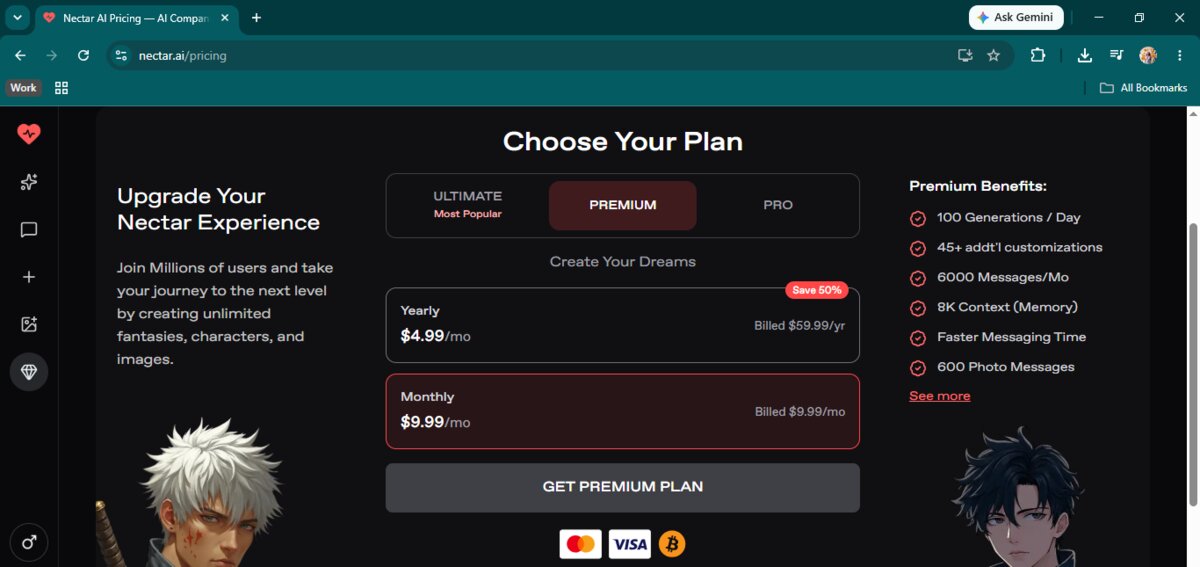
Building the character itself costs nothing anywhere. Ongoing cost depends entirely on what actually gets used.
- Free chat, no ongoing cost: Character.AI, chat stays free with ads; c.ai+ runs around $9.99/mo for extras
- Budget tier: CrushOn AI Standard at $5.99/mo
- Mid-range: Kindroid Standard at $13.99/mo; Candy AI from $3.99/mo annually up to $13.99/mo monthly
- Full-featured: Nectar AI Pro at $19.99/mo, CrushOn AI Premium at $14.99/mo
These figures reflect what we found during actual paid testing, but pricing on these platforms shifts often, so double-check the current number before subscribing to anything.
The real answer
How good this gets comes down almost entirely to what gets put into it, especially those first two weeks. The same app that leaves one person completely cold feels genuinely good to someone else, and that gap is rarely about the app itself. It's the setup step nearly everyone skips. Including, for what it's worth, that overly formal documentary narrator from the very first attempt, who eventually turned into one of the more interesting companions in our testing once the backstory field got rewritten properly. Create an AI girlfriend with an actual personality behind her and the rest mostly takes care of itself.