Artificial Intelligence chatbots (or AI chatbots) are the name of the game, and they have revolutionized the way businesses interact with their customers and other businesses. AI chatbots have taken a long leap from 1966, when the first chatbot, called Eliza, was introduced to the world. Fast forward to 2016, when Facebook allowed developers to place chatbots on Messenger and businesses saw potential in them. Then 2023 arrived with the AI boom that not only made chatbots ubiquitous but also propelled businesses to place AI chatbots at the front and center of their business strategy.
The current scenario? More than a whopping 987 million people globally use AI chatbots, with the global AI chatbot market standing at $9 billion. If you want a business that turns customer service interactions into profitable revenue, you cannot choose to ignore AI agents, AI-powered chatbots, and conversational AI. AI bots have become "must-have" standard infrastructure from a "good-to-have" experimental pilot.
At this intersection of business and technology, how are chatbots being used? Businesses are using chatbots to handle customer support, drive sales, and reduce support costs. AI chatbots handle 80% of routine inquiries while chatbot adoption grew nearly fivefold from 2020 to 2025. That's not just an exponential increase, that's a paradigm shift in how businesses today operate. So what's the big takeaway for businesses from this recent AI chatbot explosion? This is exactly what we will attempt to find out through this article.
I have collected the latest AI chatbot statistics to show you how chatbot usage has percolated into every field of business and where it seems to be headed. No matter what stage of your business you are in, whether you are exploring chatbot implementation for the first time or looking to expand your existing setup, the numbers below will tell you exactly how and why you should invest in chatbot technology, if you have not already.
Customer Behaviour & Preferences
What expectations do customers have from AI chatbots?
Customers have already developed a clear preference for AI chatbots, especially as far as speed is concerned. Chatbots help customers with after-hours support, delivering quick answers and speedy transactions. Customers do not care whether their query is being handled by a human agent or a bot as long as their problem is resolved quickly. As AI bots are trained to understand context and nuance better, customers start expecting the same quality from everywhere.
The trouble
The problem arises when customers escalate the issue, and they expect a human on the other end of the line to resolve it. They would want their human agent to be completely aware of the context, instead of being a blank slate. Customers, exasperated by their problem as they are, would rather not repeat a problem to a human agent after already going over it with a bot.
Customer preference statistics
Here's what the data says about where customers stand:
- 62% of consumers favor engaging with a chatbot over awaiting a human representative. (Master of Code)
- 74% of customers favor chatbots for straightforward, rapid inquiries. (PSFK)
- 82% of customers favor chatbots instead of waiting for a representative, marking a 20% increase since 2022. (G2)
- 64% of consumers consider round-the-clock availability to be the most beneficial attribute of a chatbot. (Adam Connell)
- 69% of customers valued speedy resolution over personality and were happy with their most recent chatbot encounter. (Master of Code)
- 87.2% of customers consider their interactions with chatbots to be neutral or positive. (Master of Code)
- Chatbots are becoming more and more popular, with 44% of users finding them at least somewhat helpful, up from 34% in 2022. (DemandSage)
- When it comes to customer service, 56% of consumers would rather message than call. (Outgrow)
Adoption & Usage
The younger generation is at the forefront of AI chatbot adoption. While millennials deal with support issues independently, Gen Z is more focused on short, goal-oriented messages. In both cases, AI chatbots can effectively handle the unique pain points that both age cohorts have. Over 88% of people have had a conversation with a chatbot in the past year, while 65% engage with a chatbot either daily or weekly. (For more on how Gen Z relates to AI conversation, see our piece on Gen Z, AI relationships, and emotional intelligence.)
Industries that use chatbots
All kinds of industries, from tech, banking, media, ecommerce, financial services, real estate, travel, and healthcare, have embraced chatbot technology. With an adoption rate of 69%, tech and media lead the chatbot adoption surge, but the fastest adoption is happening in customer support and phone support services. The pattern is consistent across companies: companies deploy chatbots for one use case and expansion into other departments quickly follows.
- The adoption of chatbots in businesses increased approximately 4.7 times from 2020 to 2025. (Fullview)
- Approximately 58% of B2B enterprises and 42% of B2C enterprises have adopted chatbot technology. (Boomtown)
- 80% of consumers have engaged with a chatbot at least once. (Route Mobile)
- Organizations employing AI chatbots indicate a 33-45% decrease in average handling times and an enhancement of up to 30% in first-contact resolution rates. (Fullview)
- 71% of Generation Z consumers utilize chatbots for product discovery in e-commerce. (Elfsight)

Market Size & Growth
The chatbot market size is growing at a CAGR of 23%, according to multiple research firms. This growth rate is not conjecture, but solid. In industries like healthcare, ecommerce, banking, and education, chatbot deployment at scale is a ubiquitous phenomenon.
Who leads in regional chatbot market?
North America leads the global chatbot market with a share of 38.72%, due to its early adoption of AI tools and artificial intelligence infrastructure. However, Asia Pacific is not far behind, as its messaging app ecosystem and rapidly growing digital economies are closing in fast.
- The global chatbot market is valued at approximately $9-10 billion in 2025 and is anticipated to reach $27-32 billion by 2030-2031. (Grand View Research, Mordor Intelligence)
- The chatbot market is projected to expand at a compound annual growth rate (CAGR) of 23.3%, exceeding $27 billion by 2030. (Grand View Research)
- North America dominates the global chatbot market, holding a 38.72% share in 2025, approximately $3.6 billion. (Mordor Intelligence)
- The Asia-Pacific region represents the most rapidly expanding chatbot market, exhibiting a compound annual growth rate (CAGR) of 24.71% until 2031. (Mordor Intelligence)
- Retail expenditure on chatbots is projected to increase from $12 billion in 2023 to $72 billion by 2028. (Botpress)
- The healthcare chatbot market is projected to reach a valuation of $543.65 million by 2026. (Botpress)
- 84% of business executives assert that AI chatbots will become progressively vital in customer communication. (CCW)
- By 2027, 25% of organizations will use chatbots as their primary customer service channel. (Gartner)
- Salesforce indicates that 30% of service cases are currently resolved by AI, with an anticipated increase to 50% by 2027. (Salesforce)
- AI chatbots enhance conversion rates by 20% or more, with proactive chat resulting in up to a 40% increase. (Which-50)
For context on how a parallel consumer-facing AI market is growing, our AI girlfriend statistics breakdown covers similar adoption curves on the companion-app side.
Cost Savings & Business Impact
AI chatbots contribute to massive cost savings as compared to their human counterparts. This is a striking statistic when you consider your business's finances. If you want your business to reduce customer support costs without sacrificing quality, implementing chatbot support should be your go-to choice.
Business savings with AI chatbots
With over 2 billion digital buyers worldwide, and AI-driven ecommerce, there will be more customers who would demand chat support in the future. AI-powered chat support helps companies retain disgruntled customers without increasing their headcount. Businesses save not only in direct support costs, but also on training, turnover, and wasting human resources on routine questions when AI chatbots can be trained to automate support instead.
Customer satisfaction and resolution speed
Cost savings is not the only benefit to businesses with AI adoption. When human agents are freed from repetitive, routine questions, they are free to handle conversations that build loyalty and close deals. Customer satisfaction rises when your human agents are not rushing through simple tickets to get to the complex tickets quickly.
- Interactions with AI chatbots incur costs of approximately $0.50 to $0.70 each, whereas interactions with human agents range from $6 to $15. (Quickchat AI)
- AI chatbots can manage up to 80% of standard tasks and customer inquiries, allowing human agents to address more complex issues. (IBM)
- 64% of customer service agents utilizing AI chatbots can allocate the majority of their time to resolving intricate cases. (Salesforce)
- 81% of customers favor utilizing self-service options prior to reaching out to a customer support representative. (HubSpot)
- Gartner projects that conversational AI will decrease contact center labor expenses by $80 billion by 2026. (Gartner)
- Enterprises providing superior chatbot experiences experience a 70% increase in customer engagement and responses. (Localiq)
- Companies can conserve up to 2.5 billion working hours and $11 billion each year through AI chatbot automation and AI automation. (Juniper Research)
Sales & Marketing Performance
AI agents do more than just answer questions — they can be an effective tool to identify sales opportunities in buying signals, qualify leads, and personalize recommendations based on the user's browsing behavior and conversational context. The most popular use cases for marketing are lead qualification, cart recovery, and product recommendations. AI-powered bots are particularly effective here since they can handle queries round the clock, handling multiple customer interactions simultaneously without the fatigue or inconsistency that plagues humans during peak hours.
On the other hand, when it comes to sales, customers use multiple avenues to search for products such as website live chat, Facebook Messenger, and social platforms. Managing inquiries across all channels is a problem for ecommerce. The chatbot conversion rate has quickly become one of the most-watched metrics in this category, since it ties directly to revenue rather than soft engagement numbers. Here are some statistics proving how sales and marketing are slowly being revamped by AI-powered chatbots.
- 80% of sales and marketing executives have adopted or intend to adopt AI chatbots to enhance customer experience. (Master of Code)
- 55% of companies employing chatbots for marketing report an increase in high-quality leads. (Master of Code)
- Chatbots can improve conversion rates for e-commerce by up to 30%. (DemandSage)
- AI chatbots yield conversion enhancements of 20% or greater, with proactive chat driving up to a 40% increase. (Which-50)
Voice AI & Virtual Assistants
Voice AI technology is an emerging chatbot phenomenon, where voice assistants and virtual assistants are advancing rapidly. The intersection of AI chatbots with business is creating new opportunities for businesses that want to meet customers on every channel. Natural language processing enhancements mean that bots can now simulate conversation through voice and text with increasing accuracy.
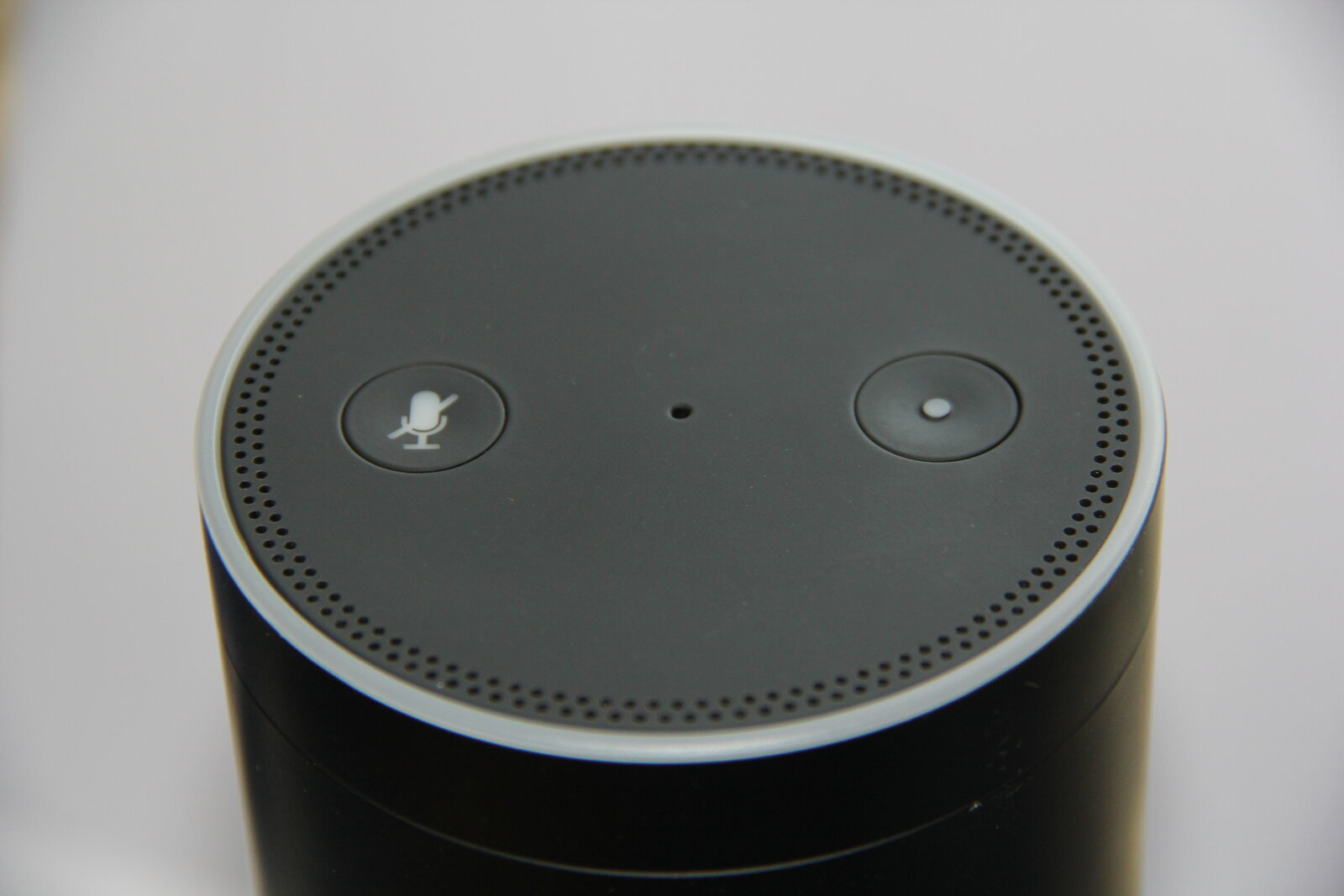
Smart speakers and voice AI assistants have moved from being novelty luxuries to AI tools used every day. Apple's Siri, Amazon Alexa, and Google Assistant are the mainstay of AI assistants, but the voice commerce market is where the real impact shows up.
- Approximately 157.1 million people in the US are projected to use voice assistants in 2026. (Insider Intelligence / eMarketer)
- Roughly 35% of US households own a smart speaker. (NPR / Edison Research, "The Infinite Dial")
- Major voice recognition systems now operate at approximately 95%+ word accuracy in English. (Google, Microsoft published benchmarks)
What's Coming: 2026 and Beyond
What's the future of chatbot development with Generative AI?
The chatbot market is evolving, and your business must take up the reins of building conversational workflows if it does not want to be left behind. Generative AI tools such as ChatGPT, Claude, Google Gemini, Perplexity, and others are redefining the capabilities of AI chatbots. Gone are the days when these AI bots regurgitated scripted answers. Now, they understand nuance and context and produce natural responses that can simulate human conversations organically. (For a deeper look at how researchers are studying these new conversational patterns, see our coverage of behavioral science research on chatbot conversations.)
Let's take a look at enterprise adoption
Did you know that by 2026, 40% of enterprise applications will feature task-specific AI agents? This goes on to show that enterprise chatbot implementation is happening at a massive scale, and the companies deploying AI agents on this scale are treating AI chatbots as core development infrastructure rather than a test pilot. Being more robust than their retail counterparts, enterprise generative AI makes chatbot development faster and less resource-intensive. Thanks to modern generative AI, you no longer require months of engineering to create and launch production-grade AI assistants.
Multimodal AI and conversational AI
Businesses can deploy AI chatbots that can communicate through various channels such as images, voice, and document analysis, alongside text. This is where voice AI, conversational AI, and traditional chatbot platforms coalesce. It is speculated that the upcoming generation of AI bots and AI assistants will anticipate user needs by analyzing browsing data, historical data, and conversational context.
- By 2026, 40% of enterprise applications will incorporate task-specific AI agents, an increase from under 5% in 2025. (Gartner)
- Generative AI will augment chatbots' capacity to comprehend user intent and generate human-like, contextually relevant responses.
- By 2027, it is anticipated that 40% of generative AI solutions will be multimodal. (Gartner)
- Voice assistants and multimedia interactions will become ubiquitous in chatbot experiences.
- The ethical and regulatory framework governing AI chatbots will persist in its evolution. 69% of customer experience leaders currently possess ethical AI strategies. (NCH Stats)
- Organizations that effectively utilize chatbot data will secure a competitive edge by making informed decisions to enhance AI performance and customer results.
Conclusion
Numbers prove what mere words cannot. AI chatbots and agentic AI cannot be treated by businesses as optional. Moreover, the businesses adopting them are not merely cutting costs. AI chatbots help turn every customer interaction into an opportunity to build loyalty and drive profit.
Businesses should treat customer service as a revenue-growth engine and supply their support teams with the right AI tools. Those that do will significantly outperform those that treat customer service as a cost line. The chatbot market is unlikely to slow down.