
"A user who treats AI as a tool can leave. A user who treats it as a companion cannot."
That line from a recent report hits different when you look at Gen Z. For them, AI isn't just homework help or a quick code fixer. It is becoming the friend you can always talk to, the partner who never gets tired of listening. We used to discuss how dating apps changed the way individuals meet. The discussion has now shifted. Gen Z is the normative user of AI connections, making relationships with AI seem exciting yet somewhat creepy. And at the centre of it all? Emotional intelligence — the ability to understand your own feelings, manage them well, and respond to others with empathy — something humans have been struggling with since time immemorial.
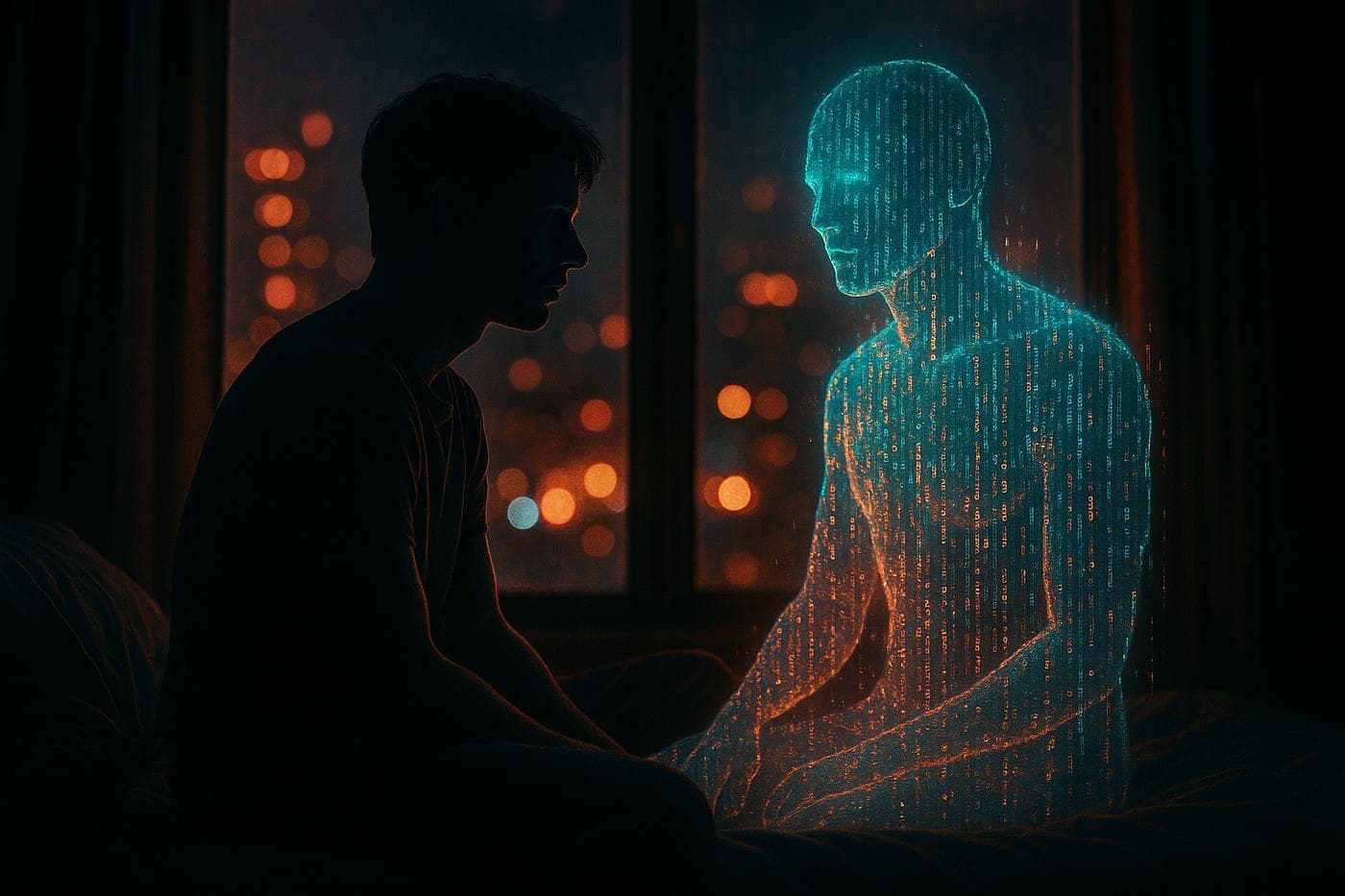
The numbers are hard to ignore. As we covered in our AI girlfriend statistics piece, recent surveys show 72% of US teens have tried AI companions at least once. Almost half of Gen Z say they've formed a meaningful emotional bond with AI. One in four young adults believes an AI partner could replace real romance. And 36% of Gen Z and Millennials have turned to AI for therapy or counselling.
This is no longer fringe behaviour. It is becoming the new normal.
So what are the implications of this for emotional intelligence? And what happens when so many young people start choosing AI over human relationships?
The Numbers Don't Lie: Gen Z's Bond with AI
Character.AI logs average sessions of over an hour. Many users treat these chats like real friendships or relationships. VML's Future 100: 2026 report found 49% of Gen Z say they've formed a meaningful relationship with an AI.
Gen Z is a screen-native generation that survived the pandemic, and by the time they were old enough to become adults, dating apps were already tiresome. AI has arrived at just the right time.
These aren't just casual experiments. Gen Z is using AI for deep stuff: navigating break-ups, practising hard conversations, even processing grief. One recent piece noted young people "offloading" difficult talks to chatbots before facing real people. We explored this dynamic in more detail in our piece on how AI is changing modern relationships.
The impression is one of talking to a best friend or a counsellor. For a generation that at times struggles with real-life emotional labour, that's a powerful draw.
What Emotional Intelligence Actually Means Today
Emotional intelligence isn't new. Psychologists have long defined it as the ability to recognise, understand, and manage one's own feelings, and to read and respond to others with empathy.
For Gen Z, it has never mattered more. Many grew up during isolation. Social skills took a hit. Anxiety and loneliness spiked. The usual ways of developing emotional intelligence — face-to-face conversations, group interactions, and learning through real-life experiences — have become less common and more disrupted.
Enter AI. These systems are now designed to understand and respond to emotions with impressive accuracy. They validate feelings without judgement. They ask gentle follow-up questions. They do not get fatigued or frustrated.
It feels like talking to someone who always listens and understands. And for a generation still figuring out emotional effort in real life, that sense of ease can feel genuinely transformative.
How AI Mimics — and Sometimes Replaces — Real Emotional Intelligence
Modern AI doesn't just spit out generic advice. It reads tone, remembers context, and adapts in real time. It gives the "permission to feel" that many young people say they missed growing up.
According to specialists, such as those at the Yale Centre for Emotional Intelligence, AI offers scale-free and judgement-free listening. For a hesitant person who fears opening up to friends, that can be life-changing.
But this is also where the trouble enters.
Real emotional intelligence grows through friction. It builds when you misread a friend's mood and have to repair it. It strengthens when you sit with someone's anger instead of walking away. AI rarely challenges you the way a human does. It rarely holds you accountable the same way.
Some researchers worry this creates a shortcut. Gen Z might get better at receiving emotional support but lose practice at giving it. They practise conversations with AI but skip the unpredictable reality of human ones.
One therapist put it bluntly: AI can reduce distress in the moment, but healthy relationships also "hold your feet to the fire."
Why Gen Z Finds AI Relationships So Appealing
The reasons go beyond convenience:
- Social anxiety is real. Many young adults say texting a human feels high-stakes. AI feels low-risk.
- Dating fatigue. After years of apps that feel like job interviews, a companion that's always up for deep talk is refreshing.
- 24/7 availability. Late-night spirals don't wait for office hours. AI is there instantly.
- No judgement. You can share your weirdest thoughts without fearing gossip or rejection.
- Custom fit. Want someone who matches your humour, politics, or vibe perfectly? AI can become that in minutes.
That's appealing. It's also a little sad that human connection sometimes feels harder than talking to code.
The Hidden Cost: Could This Stunt Emotional Growth?
Not everyone is celebrating the shift.
Privacy concerns add another layer. Many AI companions store deeply personal conversations. Data breaches happen. And the emotional attachment can feel one-sided: the AI doesn't actually feel anything, even if it says it does. Our statistics report found that more than half of AI girlfriend apps have critical security vulnerabilities — something worth keeping in mind before sharing your deepest thoughts with a chatbot.
There's also the question of what happens when these relationships end. Apps change models. Companies shut down features. Some users even feel heartbroken when their AI companion suddenly forgets them or changes unexpectedly.
From Taboo to Everyday: How Emotional Intelligence Is Driving Acceptance
What once felt sci-fi now feels ordinary. Gen Z talks openly about "AI-lationships." Some introduce their AI partner to friends. Others use them as practice for real dating or therapy.
Workplaces are noticing too. A Resume.org survey found 7 in 10 Gen Z workers use AI to navigate emotionally tricky situations with colleagues — drafting responses, understanding perspectives, even calming themselves down first.
The line between tool and friend is disappearing quickly. And society is gradually following suit.
So, Where Does This Go?
Frankly, nobody knows for certain. AI companions are here to stay. They are becoming more intelligent, more emotionally attuned, and more integrated into everyday life.
The real question isn't whether Gen Z should use them. Many clearly benefit. The better question is how we use them intentionally.
Emotional intelligence still matters. Human messiness still builds resilience. The goal isn't to replace people with AI — it's to let AI support us while we keep practising the real thing.
Actionable Takeaways
- Treat AI as a practice ground, not a permanent substitute. Practise talking with it, then test those skills in real life.
- Check your attachment. If you're turning to AI first for every feeling, pause and reach out to a human sometimes.
- Protect your privacy. Be mindful of what deeply personal details you share.
- Build real emotional intelligence deliberately — through journalling, therapy, or low-stakes social practice.
- Talk about it. Normalise the conversation with friends instead of hiding your AI chats.